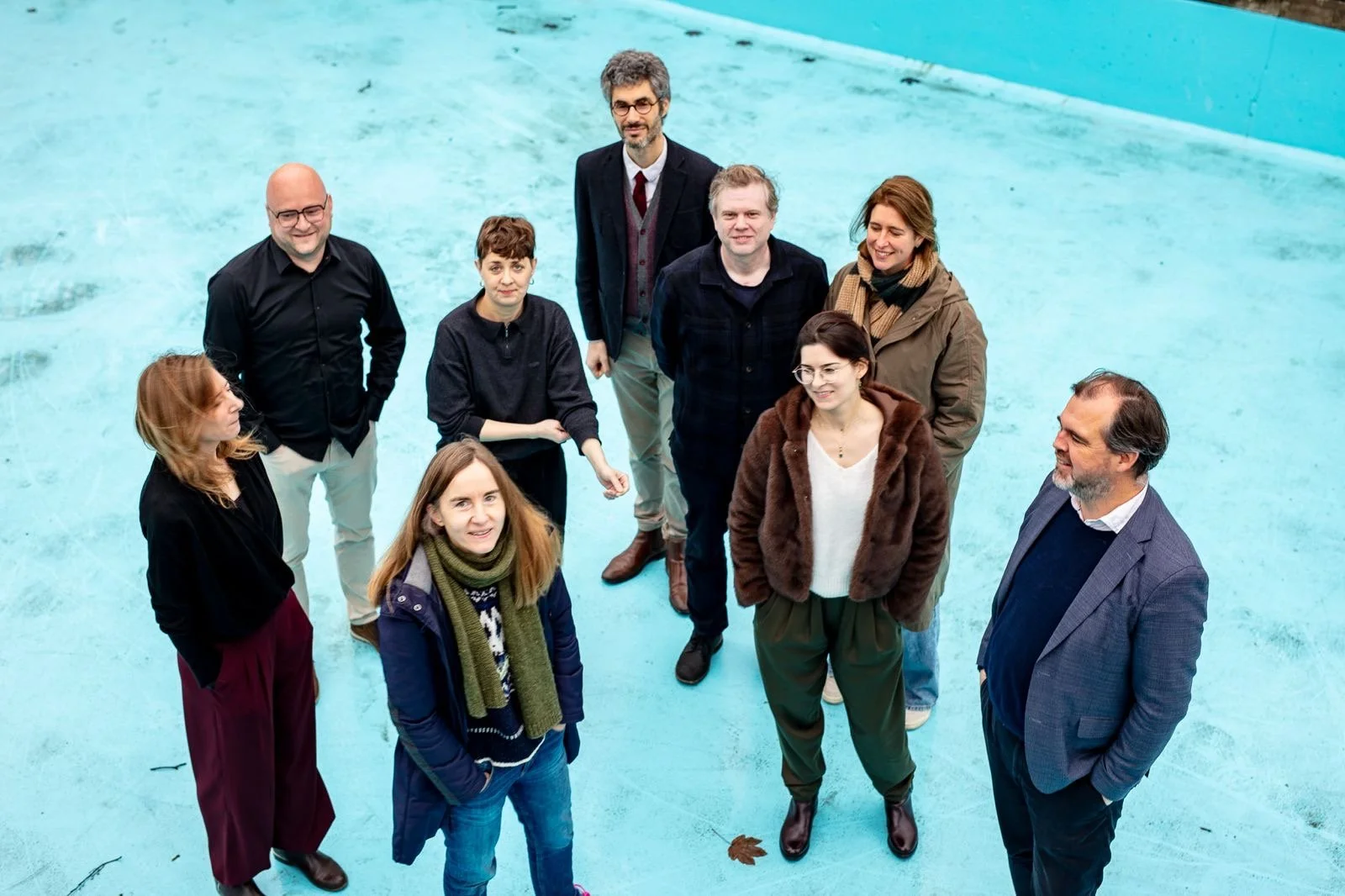
Who we are
Artistic heritage is not a fixed object from the past, but a living field of possibilities that is continuously reactivated, questioned, and given new meaning. Labo XIX&XX focuses on the fundamental question: how do we engage with artistic heritage today? LABO investigates this question through artistic practice, with emphasis on the performative and creative act as a means of knowledge generation.
Engaging with historical repertoire and cultural practices from the long nineteenth and twentieth centuries raises complex questions: How do we relate to incomplete, fragmentary, or no longer performable legacies? What does it mean to reactivate music that was intended for the salon? How can we artistically investigate cultural transfers – the movement of ideas, styles, and practices between European centers? These questions cannot be answered through historical reconstruction alone, but require an artistic research process in which experiment, interpretation, and creation are central.
The aim of Labo XIX&XX is to support, develop, and communicate fundamental artistic research into the relationship between heritage, context, and contemporary artistic practice. The emphasis lies on the artistic act – the performative and creative action through which new knowledge manifests itself. This can take shape in performance, creation, interpretation, reconstruction, or experiment, but always in a form that goes beyond mere illustration of historical facts.
Labo XIX&XX offers a platform for research that asks questions rather than delivering ready-made answers, and that provides space for risk, uncertainty, and experiment as inherent parts of the knowledge process
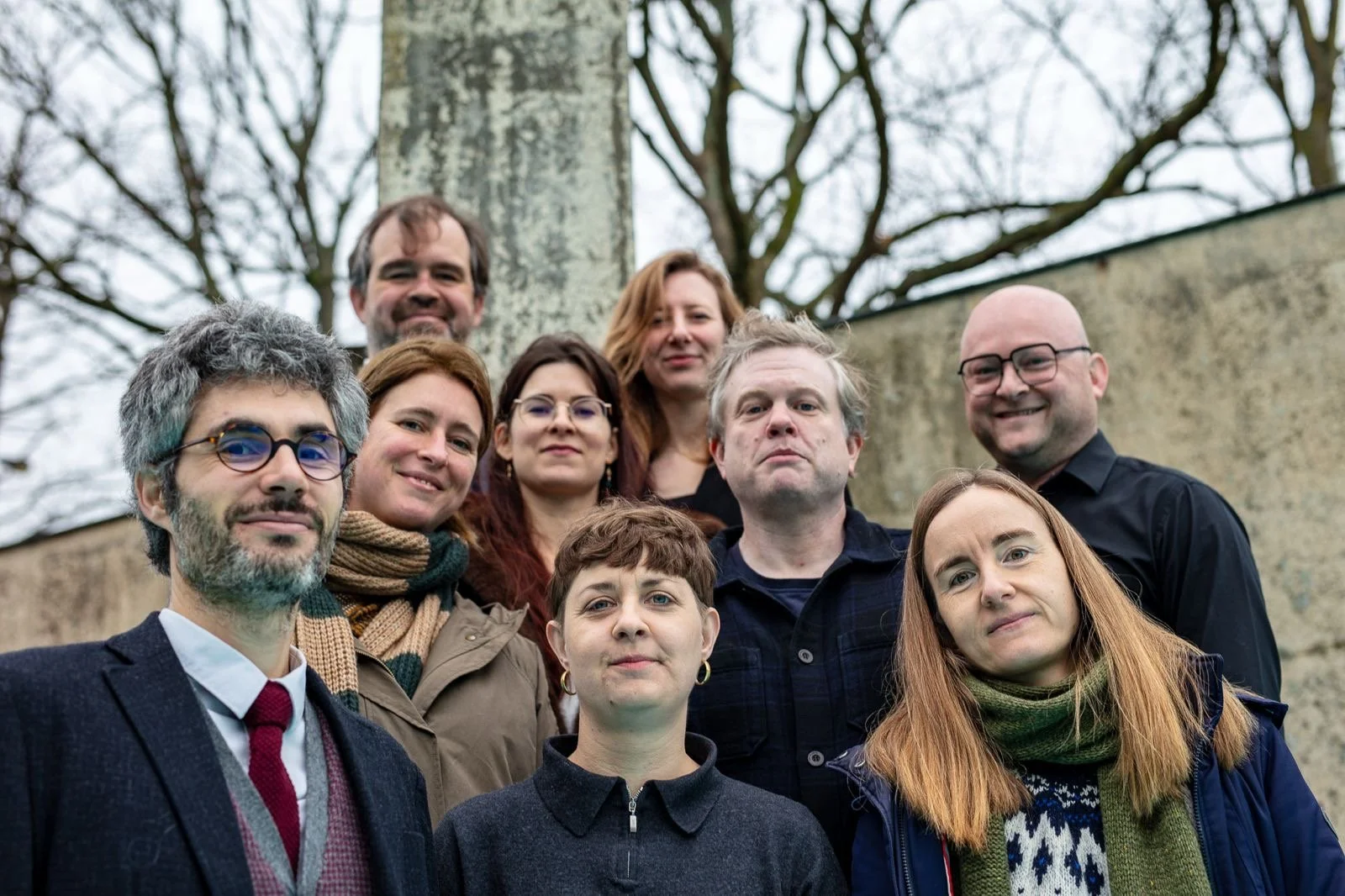
Every project we set up is shaped by both a sense of history
and of the here and now.
Labo XIX&XX has grown from the rich library collection of the Royal Conservatoire Antwerp. In its early years, the emphasis was on the performance implications of repertoire preserved in these collections, with the connection between historical sources, performance practice, and musicological study at its core. Interest in cultural life in Belgium during the long nineteenth and twentieth centuries – a period of major societal, artistic, and technological transformations – strengthened this research profile.
In recent years, however, a clear need has emerged to expand and reconceptualize the work of Labo XIX&XX, partly influenced by international developments within Artistic Research. While the first generation of projects was strongly connected to musicological methods, the laboratory now explicitly aims to center the artistic act. Historical, musicological, or sociological contexts retain their importance, but exclusively as reflective resonances that deepen the artistic core process.
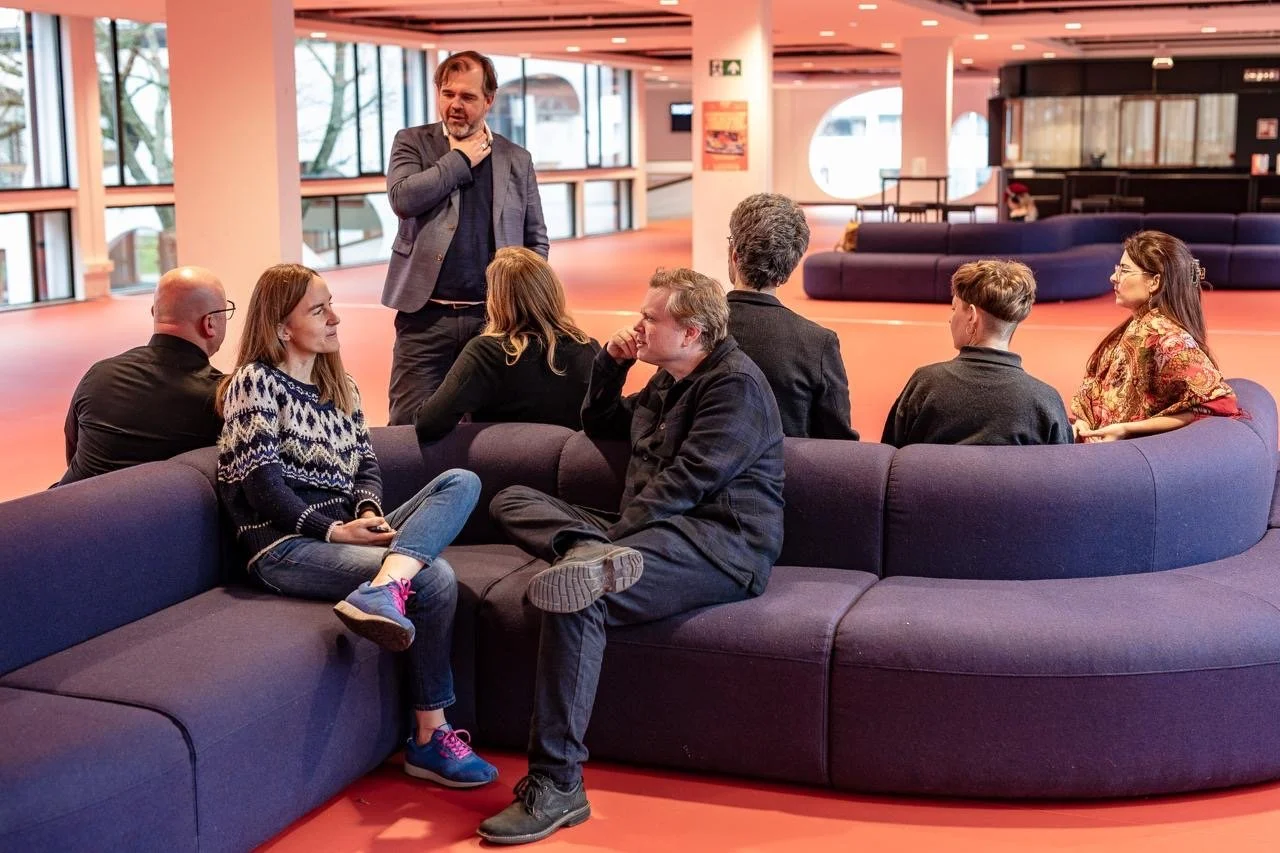
Research lines
The current focal points of the research group address:
Music in the Salon: An exploration of how music functioned as a cultural phenomenon in intimate, private settings, and how this can be investigated and reactivated today. This calls for new artistic strategies that move beyond concert hall conventions.
Engaging with Incomplete or No Longer Performable Legacies: An investigation into the creative and epistemological implications of works that are incomplete, fragmentary, or unperformable, and the question of how such legacies can nonetheless unlock artistic and research potential.
Cultural Transfers: The study of the movement of ideas, styles, networks, and practices between different European centers. Belgium's position as a crossroads of cultural influences makes this an essential perspective for understanding Belgian cultural history and its contemporary meaning.
In parallel, Labo XIX&XX is gradually developing a methodological framework that can serve as a reference for all projects within the group. This framework aims to support researchers substantively by providing criteria and instruments with which artistic processes can be investigated and documented without losing their open and experimental character.
Objectives
Labo XIX&XX aims to support, develop, and communicate fundamental artistic research into the relationship between heritage and contemporary artistic practice.
Labo XIX&XX operates from the following observations:
The growing international recognition of Artistic Research as a legitimate form of knowledge generation, in which the artistic act itself has epistemological value
The need for platforms where artistic research has room for experiment, uncertainty, and process-based work, without the pressure of immediate applicability
The richness of Belgian cultural collections and archives that call for new forms of artistic activation
The importance of cultural transfers for understanding Belgium's position in European cultural history
Labo XIX&XX builds and supports in practice
An artistic research environment
where dancers, actors, musicians, composers, researchers, and makers experiment with new forms of engaging with heritage. The laboratory character implies space for risk, uncertainty, and experiment, where the process of doing, failing, and reforming is part of knowledge production. To this end, Labo XIX&XX organizes discussion moments, working groups, presentations, and artistic events.
An (inter)national network
around artistic research and heritage activation: interaction with artistic and research actors from international research centers, festivals, ensembles, and educational institutions. Labo XIX&XX contributes to conferences, invites artists and researchers, establishes international contacts, and facilitates exchange between artistic practice and research.
Original collaborative research
that generates artistic and academic output: from individual expertise, joint knowledge exchange, and methodological reflection, Labo XIX&XX develops insights that are not merely rational, but also experiential, embodied, and performative. By investigating and artistically activating cultural transfers, the laboratory aims to make broader contributions to the question of how historical repertoires can be made relevant and meaningful today.
From these three pillars, Labo XIX&XX aims to realize high-quality, original, and well-founded artistic research on the relationship between history, repertoire, and artistic creation.
Horizon
With this self-understanding, Labo XIX&XX positions itself as a platform for artistic research that is anchored in the Belgian cultural context, yet open to international exchange.
It aspires to a dual role: on the one hand as a catalyst for innovative forms of artistic research in Flanders, on the other as an interlocutor within the international community of researchers rethinking the relationship between history, repertoire, and artistic creation.
Artistic research is thereby understood as a method to generate knowledge that cannot be reached elsewhere: insights that are not merely rational, but also experiential, embodied, and performative.